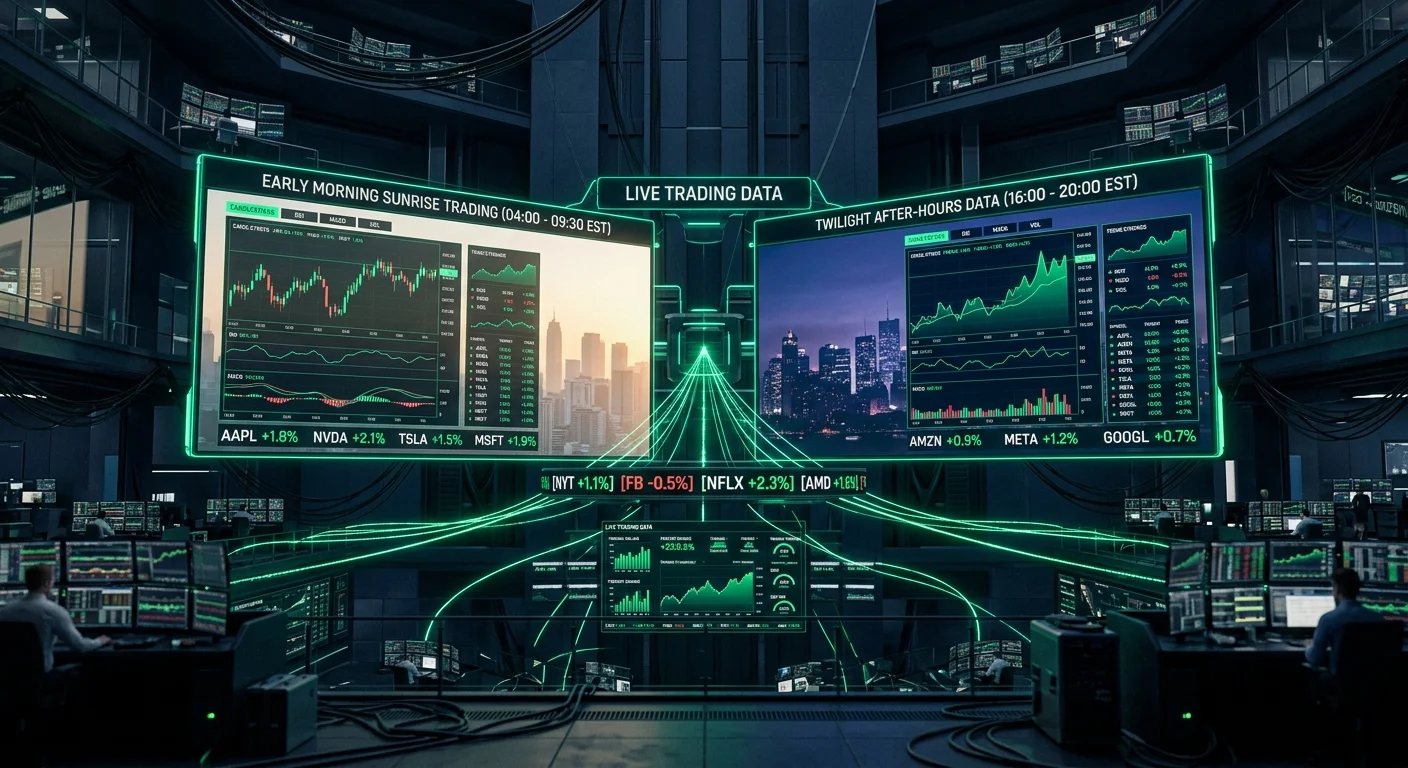
Modern financial markets operate around the clock, and traditional wall-street opening bells no longer dictate when price discovery happens. In 2026, stock trading online has fundamentally transformed as retail traders demand non-stop access to major global equities. When corporate giants like Tesla, Nvidia, Apple, or Microsoft release high-impact quarterly earnings reports after the closing bell, waiting until 9:30 AM Eastern Time the following morning is no longer acceptable. Entering pre-market and post-market sessions allows traders to act instantly on earnings surprises, macro announcements, and overnight geopolitical shifts.
Two industry giants have taken center stage in this evolution: Pepperstone and XTB. As two of the premier stock trading companies globally, both platforms have aggressively expanded their extended-hours trading infrastructure. However, their underlying execution models, fee structures, and target audiences differ substantially. Whether you are searching for how to buy stocks for beginners or optimizing high-frequency algorithmic models for pre-market volatility, choosing between these two brokerage powerhouses requires a granular breakdown of how they handle liquidity, spreads, order types, and platform technology outside regular market hours.
Why Extended-Hours Stock Trading Changed the Game in 2026
Historically, extended-hours trading—comprising the pre-market session (4:00 AM to 9:30 AM ET) and the after-hours session (4:00 PM to 8:00 PM ET)—was the exclusive playground of institutional market makers and dark pools. Retail traders were left exposed to overnight gap risk, forced to watch their positions move drastically in after-hours trading without any ability to hedge or exit until the main cash session opened.
In 2026, tech infrastructure and liquidity aggregation allow retail platforms to offer seamless extended-hours access. Over 60% of significant price moves in mega-cap technology stocks now occur outside normal market hours, driven primarily by:
⚡ Featured Brokers



- Earnings Announcements: The vast majority of S&P 500 companies publish their financial results either before 9:00 AM ET or after 4:00 PM ET.
- Global Macro Data Releases: Economic indicators from Asia and Europe trigger sudden shifts in US index futures and individual stocks long before New York wakes up.
- Overnight News Flow: Regulatory decisions, executive changes, and supply chain disruptions happen continuously across time zones.
For traders learning stock trading for beginners, extended hours offer immediate responsiveness. However, this flexibility introduces unique technical variables: lower liquidity, wider bid-ask spreads, and heightened price volatility. Understanding how your underlying broker manages these factors is vital to long-term profitability. For a foundational understanding of brokerage infrastructure and market clearing, review What a Broker Is and Why You Can't Trade Online Without One.
Pepperstone: The High-Speed CFD Engine for 24/5 US Equities
Pepperstone built its formidable reputation as an institutional-grade Forex and CFD provider. To cement its market leadership in 2026, Pepperstone introduced 24-hour trading on top US shares, expanding its extended-hours CFD offering to allow round-the-clock trading five days a week on key equities like Tesla, Apple, Amazon, Nvidia, and Meta.
Core Technology & Multi-Platform Integration
Pepperstone does not force users into a single proprietary ecosystem. Instead, it offers execution across four industry-standard trading environments:
- TradingView: Direct integration with world-class charting, pine-script custom indicators, and seamless order entry.
- MetaTrader 5 (MT5): Tailored for algorithmic traders requiring multi-asset depth, custom Expert Advisors (EAs), and advanced backtesting engines.
- cTrader: Renowned for fast order execution, depth-of-market (DOM) transparency, and advanced risk management tools.
- Pepperstone Mobile App: A streamlined interface for managing positions on the move.
Execution Model and Pricing
Because Pepperstone operates primarily as a Contract for Difference (CFD) broker, traders do not take delivery of the underlying physical shares. Instead, they trade price movements with dynamic leverage. This structure brings two major advantages for extended-hours trading:
- Short Selling Capability: Traders can easily take short positions during after-hours sessions to profit from negative earnings reports or hedge existing spot portfolios.
- Leverage Flexibility: Retail traders under major regulatory frameworks can utilize up to 1:5 leverage on equity CFDs, requiring less capital outlay to capture short-term price swings.
Pepperstone charges zero commission on US equity CFDs under standard accounts, monetizing through the spread, or offers low variable spreads with fixed per-share commissions on Razor accounts. During pre-market and post-market sessions, Pepperstone aggregates pricing from top-tier liquidity providers to keep extended-hours spreads competitive.
XTB: The Dual-Hybrid Model for Investors and Traders
XTB has taken a strikingly different approach to capturing market share in 2026. As one of Europe's largest listed stock trading companies, XTB combines direct real stock investing with CFD trading, catering simultaneously to long-term buy-and-hold investors and short-term speculators.
Real Stocks vs. Stock CFDs
When exploring how to buy stocks for beginners, XTB stands out by offering zero-commission real share purchases up to €100,000 monthly turnover. Beginners can purchase physical fractional shares of major US and European companies, receiving actual dividend distributions without incurring overnight financing fees (swap charges).
For active traders needing leverage and short-selling capabilities during extended sessions, XTB also provides stock CFDs alongside its physical equity desk.
xStation 5 Platform Experience
Unlike Pepperstone's multi-platform strategy, XTB channels all trading activity through its proprietary platform: xStation 5 (available on web, desktop, and mobile). xStation 5 is widely regarded as one of the most user-friendly trading interfaces on the market. Key capabilities include:
- Real-time News and Sentiment Analysis: Live economic calendar feeds, company news, and market sentiment integrated directly into the charting software.
- Extended-Hours Trading Hours: XTB offers extended trading hours on hundreds of US equities, enabling clients to react instantly to earnings releases during pre-market and after-hours windows.
- Built-in Investment Plans: Automated dividend reinvestment and portfolio allocation tools designed for passive growth.
Pepperstone vs. XTB: Head-to-Head Feature Comparison
To help you determine which provider aligns with your trading methodology, let us examine their capabilities across key parameters:
| Parameter | Pepperstone | XTB |
|---|---|---|
| Primary Trading Assets | Stock CFDs, Forex, Indices, Commodities, Crypto | Real Shares/ETFs (0% Commission) + Stock CFDs, Forex, Indices |
| 24/5 US Stock Trading | Yes (Selected mega-cap US equities 24/5) | Yes (24/5 access on top US stocks) |
| Extended Hours Access | Pre-Market & Post-Market on hundreds of US CFDs | Pre-Market & After-Hours on US equities |
| Supported Platforms | TradingView, MT5, cTrader, Pepperstone App | xStation 5, xStation Mobile |
| 0% Commission Real Shares | No (CFDs only) | Yes (Up to €100,000/month volume) |
| Short Selling Ability | Seamless on all equity CFDs | Available on Stock CFDs (Not on real shares) |
| Leverage on Equities | Up to 1:5 (Retail regulatory limit) | Up to 1:5 (CFDs only) |
| Automated Trading (EAs/Bots) | Full support via MT5 and cTrader API | Limited (Custom API available for advanced users) |
| Minimum Deposit | $0 recommended ($200 suggested) | $0 |
Managing Extended-Hours Risks: Volatility, Slippage, and Execution Quality
While extended-hours trading provides early access to market movements, it presents distinct risks that every trader must understand before entering an after-hours order.
1. The Liquidity Vacuum
During regular trading hours, market makers supply billions of dollars in liquidity, creating tight spreads. Outside these hours, overall trading volume drops significantly. A market order placed during the pre-market session may suffer from substantial slippage—executing at a price significantly worse than expected because there are fewer matching limit orders on the order book.
2. Widening Spreads
Because liquidity providers take on higher inventory risk outside regular market hours, bid-ask spreads naturally widen. If a stock typically carries a $0.02 spread during cash hours, that spread can easily expand to $0.20 or $0.50 during post-market earnings announcements.
3. Systematic Strategy Adaptations
If you utilize systematic or automated execution models, trading during extended hours requires strict risk controls. This is where modern quantitative risk management frameworks—such as those integrated within algorithmic strategies—become essential.
Quantitative execution models, like those developed in our flagship SVX Strategies program, prioritize disciplined position sizing and strict order execution rules to neutralize extreme volatility spikes. For instance, relying exclusively on limit orders rather than market orders during extended sessions prevents adverse fills when liquidity thins out.
To dive deeper into protecting your trading equity against outsized overnight drawdowns, read Why Disciplined Position Sizing is 2026's Top Trading Rule: A Back to Basics Guide.
Platform Technology & User Experience: MT5 & TradingView vs. xStation 5
When choosing between these two brokerage leaders, your decision often comes down to your preferred user environment.
The Power-User Stack: Pepperstone's Ecosystem
For technical traders who rely on sophisticated charting tools, multi-monitor setups, and automated indicators, Pepperstone offers an unmatchable toolkit:
- TradingView Integration: You can link your Pepperstone account directly to TradingView, allowing you to execute extended-hours trades directly off TradingView's industry-leading charts.
- MetaTrader 5 Superiority: For backtesting overnight strategies or executing complex algorithmic scripts across extended sessions, MT5 remains the gold standard.
```
+-----------------------------------------------------------------------+
| PEPPERSTONE TRADE FLOW |
|---|
| v |
| [ ECN Liquidity Pool ] |
| (24/5 Equities & CFDs) |
+-----------------------------------------------------------------------+
```
The All-in-One Engine: XTB's xStation 5
For traders who prefer simplicity without sacrificing analytical depth, XTB delivers a masterclass in proprietary software design. xStation 5 consolidates chart analysis, economic news feeds, dividend trackers, and order management into a single interface.
```
+-----------------------------------------------------------------------+
| XTB TRADE FLOW |
|---|
| v |
| [ Direct Market Access / ] |
| [ 0% Commission Real Stocks ] |
+-----------------------------------------------------------------------+
```
If you prefer trading real equities commission-free while tracking earnings releases within the same window, XTB’s platform provides a frictionless experience. However, if you rely on external third-party software, Expert Advisors, or Pine Script automation, Pepperstone is the clear winner.
For traders seeking an alternative multi-asset ECN broker with deep liquidity across Forex and indices to complement their stock trading, FP Markets also offers direct ECN execution with low spreads across international markets.
Final Verdict: Which Broker Wins in 2026?
Selecting the right partner for extended-hours stock trading depends entirely on your strategy, asset preference, and operational style.
Choose Pepperstone if:
- You are an active day trader or swing trader focused on stock CFDs with leverage.
- You want continuous 24/5 trading on top-tier US equities.
- You require third-party platform integration like TradingView, MetaTrader 5, or cTrader.
- You execute automated strategies or rely heavily on short selling during after-hours market moves.
Choose XTB if:
- You want to combine real stock investing (0% commission) with extended-hours equity access.
- You are searching for an intuitive ecosystem suited for stock trading for beginners.
- You prefer an all-in-one platform (xStation 5) with built-in fundamental research, sentiment charts, and news feeds.
- You want to build a long-term dividend portfolio while actively trading pre-market price action on earnings days.
To compare these platforms against other top-rated international brokers, read Online Trading Broker Reviews 2026: Your Essential Guide to Finding the Right Partner.
Frequently Asked Questions
Can beginners trade stocks during extended hours?
Yes, beginners can trade during extended hours, but caution is highly recommended. Extended sessions experience lower trading volume and higher price volatility, which can lead to rapid price swings. Beginners should use limit orders instead of market orders to avoid unexpected execution prices caused by slippage.
What is the main difference between Pepperstone share CFDs and XTB real stocks?
With Pepperstone, you trade Contracts for Difference (CFDs), meaning you speculate on stock price movements using leverage without owning the physical underlying asset. With XTB, you can buy real physical stocks (and fractional shares) with 0% commission, earning standard shareholder rights and cash dividends, or trade stock CFDs if you require leverage and shorting capabilities.
Are bid-ask spreads wider during pre-market and after-hours trading?
Yes. Because liquidity drops outside regular cash market hours, market makers widen their spreads to offset higher holding risk. Both Pepperstone and XTB aggregate pricing from liquidity providers, but traders should expect wider spreads during extended-hours trading compared to regular NYSE and NASDAQ sessions.
Can I run automated trading bots during extended sessions on Pepperstone?
Yes. Pepperstone fully supports automated trading strategies, Expert Advisors (EAs), and custom scripts on MetaTrader 5 and cTrader. Traders can configure their systems to execute trades 24/5 across supported US equities.
How do quarterly earnings releases affect extended-hours stock trading?
Most major US corporations publish their earnings either in the pre-market session (before 9:30 AM ET) or the post-market session (after 4:00 PM ET). Extended-hours trading allows investors to immediately buy or sell shares in response to revenue reports, guidance changes, or earnings beats before the regular market opens.
What order type should I use when trading after-hours?
You should almost always use Limit Orders during extended-hours trading. A limit order guarantees that your trade will only execute at your specified price or better, protecting you from sudden spread spikes or low-liquidity slippage common in pre-market and post-market sessions.
Disclaimer: Content for educational purposes only. Not financial advice. Trading carries high risk. Past performance of SVX or any system does not guarantee future results.
📡 FBC Ecosystem:
This analysis is just one piece of the puzzle.
- For tactical execution: Follow X (Twitter)
- For the morning briefing: Join Telegram